Lineage: California Orange x Skunk #1 x Cannabis ruderalis
Tangie Autoflower is a sativa-dominant autoflower bred from Tangie x Cannabis ruderalis. It offers a fast flowering cycle, record-level limonene content, and a sharp tangerine aroma with a clear, focused daytime effect.
Tangie is the strain that made citrus cannabis a category. Before it arrived, orange-flavoured weed was a novelty. After it, half the flavour-driven strains on the market could trace something back to it, including Clementine, Mimosa and a long list of others.
The original came from DNA Genetics and Crockett Family Farms, built on a California Orange cut that had been in the Crockett family since the 1980s. It swept the competition circuit almost immediately, taking first place in the Sativa category at the 2013 High Times Cannabis Cup, then first and second in 2014, followed by a placing at the Spannabis Champions Cup in 2015.
What sets it apart is measurable rather than marketing. Lab analysis puts Tangie’s limonene content around 0.85%, among the highest concentrations recorded in any commercial cultivar. That is the reason the aroma reads as actual tangerine peel rather than the vague citrus note most strains offer.
The autoflowering version compresses that into an 8 to 10 week cycle. For Australian growers it is a strain with a clear profile: outstanding in dry regions, workable but demanding on the humid east coast, and more dependent on a careful dry and cure than almost anything else in the catalogue.
Origins & Genetics of Tangie
Tangie (California Orange × Skunk #1) × Ruderalis
California Orange is the source of the tangerine character. The specific cut used was a Crockett family heirloom maintained since the 1980s, and it carries the limonene concentration that defines the strain. Crockett has indicated the paternal side included something beyond straight Skunk #1, which may account for the unusual intensity of the citrus expression.
Skunk #1, itself descended from Afghani, Acapulco Gold and Colombian Gold, contributes the practical qualities. It brings vigour, structural stability, improved yield, disease resistance and faster maturation, along with the phenotypic consistency that makes Tangie predictable to grow.
Ruderalis supplies the day-neutral flowering trait and controls the considerable height of the photoperiod original, which can push past two metres outdoors.
Worth clearing up a common confusion: Tangie is often described as a reworking of the 1990s Tangerine Dream, and DNA Genetics has referenced that connection in its own catalogue. It is a flavour tribute rather than a genetic one. Tangerine Dream descends from A5 and G-13, and shares no actual lineage with Tangie.
Growth habit is sativa-leaning with strong side branching and generous internodal spacing, which makes it unusually receptive to training for a plant on a short clock.
Tangie Effects, Aroma & Flavour
Tangie is one of the more genuinely functional strains available. The onset is quick and cleanly cerebral, arriving as mental sharpness and elevated mood rather than a physical wave. Growers and users consistently describe it as lucid, a daytime buzz without the overwhelming rush that high-THC sativas often deliver.
Focus is the standout quality. Where many energising strains scatter attention, Tangie tends to concentrate it, which is why it has a long-standing following among people who use cannabis while working, writing or making things. The effect supports task engagement rather than pulling away from it.
The body component is light. There is a mild physical ease from the myrcene content, but nothing approaching sedation, and it will not weigh you down at moderate doses. Duration runs around two to three hours.
Two practical notes. Dry mouth is pronounced with this strain, more so than average, so keep water nearby. And while the effect is clear rather than racy, anyone with a history of THC-induced anxiety should still start low, since energising sativas at this potency can amplify it.
Growing Tangie Seeds
Tangie Auto rates as medium difficulty. The plant itself is vigorous and forgiving thanks to the Skunk heritage, and it responds well to training. The complication sits at either end of the grow: dense bud structure creates humidity risk during late flower, and the volatile terpene profile is easily destroyed after harvest.
Get both right and this is one of the most rewarding strains available. Get either wrong and you end up with average flower that gives no hint of what the strain is known for.
Expect a finished height of 80 to 120cm indoors and up to 150cm outdoors, with strong side branching and good spacing between nodes. Growers report it responding well even to high-stress training, staying compact for a sativa-dominant plant, and producing dense, frosty buds that are notably easy to trim.
Aroma development follows a predictable curve. Citrus notes appear around week five from sprout, with full expression arriving between weeks seven and nine.
Indoor Growing Tips for Australian Growers
Light schedule: 18/6 or 20/4 from germination to harvest with no changes required. Tangie responds well to strong light, though the citrus profile develops reliably even at moderate intensity.
Pot size: Plant directly into the final container, 11 to 15 litres. Skip transplanting entirely. Fabric pots improve aeration and drainage.
Temperature: Target 21 to 27°C. Limonene is volatile and heat-sensitive, so sustained temperatures above 30°C will strip out exactly the aroma you are growing this strain for. In an Australian summer, cooling capacity matters more than raw light wattage. Running the dark period through the hottest afternoon hours helps considerably.
Humidity: 40 to 50% during flower, dropping toward 30 to 40% in the final weeks. The dense bud structure means this is not negotiable in a coastal climate. A dehumidifier through a Brisbane or Sydney summer is a genuine requirement rather than an upgrade.
Training: This is where Tangie shines. The strong branching and open internodal spacing make it one of the best autoflower candidates for low-stress training and SCROG. Tie branches outward from weeks two to three to build an even canopy. It tolerates training better than most autos, though all work should still stop by week four.
Defoliation: Remove interior growth in the lower 20 to 30% of the plant to improve airflow and light penetration. This matters more here than on airier strains, since dense colas need moving air around them.
Support: Colas gain substantial mass through weeks seven and eight. Stakes, yo-yos or a trellis are worth having ready before branches start bending.
Odour control: A properly sized carbon filter, not an undersized one. This strain will announce itself through a closed door.
Outdoor Growing Tips for Australian Growers
Tangie is a Mediterranean-climate plant at heart. It wants long sunny days, warm temperatures and low humidity, which describes some of Australia very well and other parts of it not at all.
Best suited regions: Perth, Adelaide, inland NSW, inland Victoria and the drier parts of South Australia. These are close to ideal conditions and outdoor Tangie in these regions can be exceptional.
Challenging regions: Coastal Queensland, northern NSW and Darwin. The dense bud structure is a real liability in humid conditions, and grower reports of losing main colas to bud rot outdoors are not uncommon. This is possible with careful timing and cover, but Tangie is not the strain to choose if you are growing outdoors in a wet subtropical summer with no shelter.
Timing by region: In temperate and Mediterranean zones, a September to October sowing catches ideal conditions, with a second run possible from December. In subtropical zones, an autumn start in March or April keeps flowering clear of the wet season and is far safer than a summer grow. In tropical regions, restrict growing to the dry season from May to August. In Tasmania and alpine areas, use November to January.
Cover matters: A greenhouse, polytunnel or covered patio transforms the risk profile in humid regions. Being able to keep rain off developing colas is worth more than any other single intervention.
Containers over in-ground: Strongly recommended, since the ability to move plants ahead of a rain event can save a harvest.
Heat: While it likes warmth, extended heatwaves above 32°C degrade the terpene profile. Afternoon shade during extreme weather protects the aroma even if the plant looks fine without it.
Pests: Watch for caterpillars, grasshoppers and whitefly through summer. Caterpillar damage inside a dense cola is a common entry point for rot, so inspection matters twice over here.
Nutrients, Water, and Environment
Medium: Light, well-draining soil or coco with 20 to 30% perlite. Rapid drainage matters both for root health and for keeping humidity down around the plant base.
Feeding: Start around quarter strength and build gradually. Tangie is a moderately hungry plant by autoflower standards, and growers sometimes report deficiencies from starting too conservatively, so pay attention to the plant rather than the schedule. Yellowing lower leaves in weeks four to five usually means it wants more, not less.
Nitrogen in late flower: Reduce or eliminate it from around week six. Excess nitrogen late in the cycle mutes the terpene profile noticeably on this strain, and shifting toward a phosphorus and potassium focused feed produces both better flower and better aroma.
Bottom-feeding systems: Worth a caution. Growers using automated bottom-fed systems have reported deficiency problems with Tangie caused by dry upper soil and salt accumulation near the surface. Occasional top watering resolves it.
pH: 6.0 to 6.5 in soil, 5.5 to 6.0 in coco. Australian tap water hardness varies by region, so a meter is worth having.
Watering: Let the top few centimetres dry between waterings and judge by pot weight. Water early morning during summer.
Flushing: Plain pH-adjusted water for the final one to two weeks. Residual nutrients dull the citrus profile more than they would on an earthier strain.
Drying and Curing (Read This One)
More Tangie harvests are ruined after the chop than during the grow, and it is worth treating this as a distinct stage rather than an afterthought.
Limonene and terpinolene are volatile monoterpenes. Dry them too fast or too warm and they do not simply fade, they degrade into flat, hay-like notes. Growers who do everything right through flowering routinely lose the strain’s signature aroma in the first week after harvest.
Target conditions: A slow dry over 10 to 14 days at around 15 to 18°C and 60% relative humidity, in a dark, ventilated space.
The Australian problem: Those numbers are difficult to hit in most of the country during summer. An uncontrolled garage or spare room in a Brisbane February will sit far warmer than 18°C, and flower will dry in three or four days instead of twelve. This is the single most common reason Australian growers report disappointing Tangie.
Practical solutions: Dry in the coolest room in the house, ideally air-conditioned. A dedicated dry box or converted fridge with humidity control is the reliable answer if you grow this strain regularly. Failing that, time the grow so harvest lands in autumn or winter when ambient conditions do the work for you.
Curing: Jar at 60 to 62% humidity and cure for at least three to four weeks. Tangie continues developing well past the point most growers stop paying attention.
Common Grower Mistakes to Avoid
Drying too fast. The defining mistake with this strain. A rushed dry destroys the limonene that is the entire reason to grow it. Plan your drying space before you plant.
Running too hot in flower. Heat above 30°C strips terpenes even when the plant looks healthy. The damage is invisible until you smell the finished product.
Too much nitrogen late. Mutes the aroma. Taper from week six.
Underestimating the smell. Growers regularly discover mid-flower that their filter is not up to the job. Size it properly from the start.
Ignoring airflow around dense colas. The bud structure traps moisture. Defoliate the lower interior and keep air moving.
Skipping branch support. Colas gain real weight in weeks seven and eight, and a snapped branch late in flower is avoidable damage.
Transplanting. Start in the final pot. Days lost to shock are days of yield gone on a short clock.
Harvesting too late. For the clear, energetic effect Tangie is known for, harvest when trichomes are mostly cloudy with minimal amber. Letting it run long shifts the experience toward something heavier and less characteristic.
Tangie Flowering Time & Yield
Seed to harvest: 8 to 10 weeks
Indoor: 450 to 550 g/m² | Height 80 to 120cm
Outdoor: 100 to 200g per plant | Height 100 to 150cm
Flowering begins automatically around weeks three to four. Some breeder lines finish closer to 7 to 9 weeks while others run the full 10, so check the specific line rather than assuming.
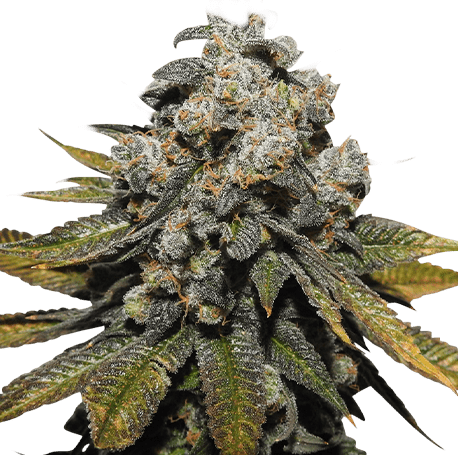
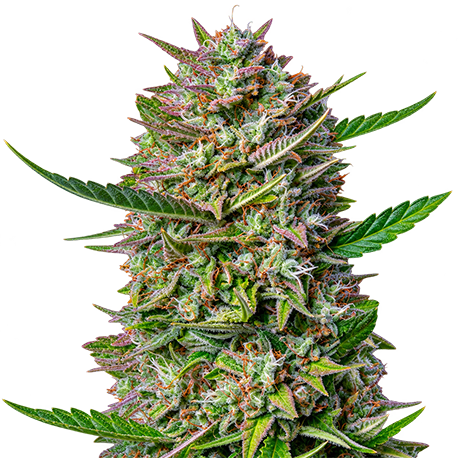
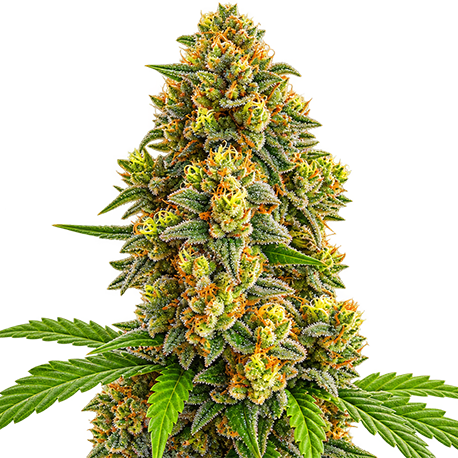
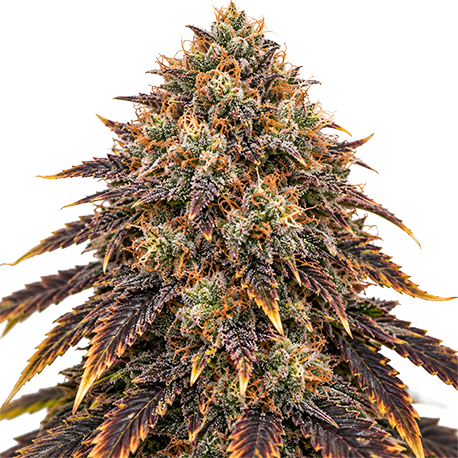
Buds develop hard and dense with heavy trichome coverage, often carrying a crystalline sheen. Colour ranges from lime through to deep forest green with orange pistils. The high bud-to-leaf ratio makes trimming straightforward, and the resin content makes it a strong extraction candidate. Limonene-dominant live rosin from Tangie is among the most sought-after in the category.
A note on yield figures: photoperiod Tangie can produce 550 to 650 g/m² and some retailers quote those numbers against autoflower seeds. The figures above reflect realistic autoflower performance on an 8 to 10 week cycle.
Who Tangie Seeds Suit Best
Growers in dry regions. Perth, Adelaide and inland areas suit this strain about as well as anywhere in the world. If that describes you, Tangie should be high on your list.
Indoor growers with environmental control. Temperature and humidity management unlocks what this strain can actually do.
Training enthusiasts. The branching structure and internodal spacing make it one of the best autoflower candidates for LST and SCROG.
Daytime and functional users. Clear, focused and lucid rather than scattered or sedating.
Extract makers. The limonene concentration translates exceptionally well into rosin and live resin.
Flavour purists. If you want the definitive citrus cannabis experience rather than a derivative of it, this is the source.
Less suited to: Uncovered outdoor grows in humid subtropical regions, where the dense buds are a genuine liability. Growers without a cool drying space, since the post-harvest handling is where this strain is most often lost. Anyone needing discretion without proper filtration. And anyone wanting sedation or heavy body relief, who will be better served by an indica-dominant option.
5 out of 5 seeds germinated now i just have to sit on my hands and be patient to that bloody ripper of a day when i get to try this fruity sounding strain. What a site. 🙂 keep being u mr. MEDISEED.

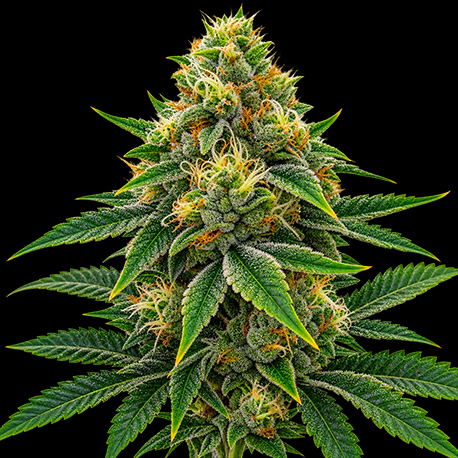





 What Is Tangie Autoflower?
 Tangie Autoflower






5 out of 5 seeds germinated now i just have to sit on my hands and be patient to that bloody ripper of a day when i get to try this fruity sounding strain. What a site. 🙂 keep being u mr. MEDISEED.
Looking forward to seeing these beauties grow