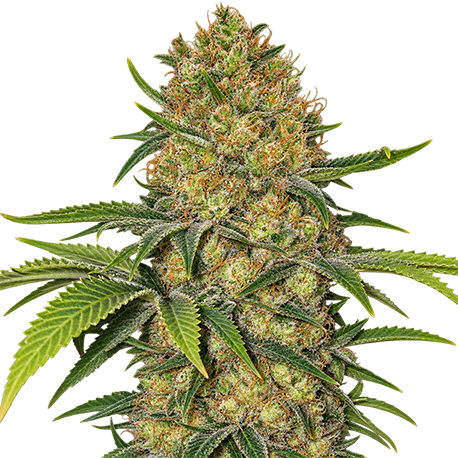
Orange Skunk Feminised brings a classic West Coast citrus-skunk cross to a full photoperiod grow. It’s a strain that delivers an upbeat, clear high built around genuine California Orange character.
g/m2 Yields:400–600 g/m² indoors; 450–800g per plant outdoors
What Is Orange Skunk Feminised?
Orange Skunk Feminised brings a classic West Coast citrus-skunk cross to a full photoperiod grow. Most sources trace it to a California Orange and Skunk #1 cross. That cross emerged on the US West Coast in the late 1980s or early 1990s. This feminised version grows on a standard light cycle, flowering once switched to 12/12.
Several seed banks now sell their own feminised version under this name. No single breeder owns the label, though, the way some legacy strains have one. One source instead describes a product sold under a similar name as a Jack The Ripper and Orange Velvet cross from Expert Seeds. Treat that as a distinct account rather than the same lineage as the more common California Orange and Skunk #1 story.
What makes this version stand out is how faithfully it carries forward that bright citrus character. It also carries forward a genuinely upbeat, clear-headed high. As a result, it remains a popular choice for growers after a sociable, daytime-friendly hybrid with real citrus flavour.
Origins & Genetics of Orange Skunk
Orange Skunk Feminised most commonly traces back to a California Orange and Skunk #1 cross. That cross was stabilised on the US West Coast in the late 1980s or early 1990s. One source instead describes a Jack The Ripper and Orange Velvet cross that Expert Seeds bred under a closely related product name. These read as genuinely different genetic stories rather than a single settled lineage, so treat the exact parentage as seller-dependent.
Most sources describe a sativa-leaning phenotype, generally putting the split somewhere between 55% and 70% sativa. One source instead classifies the same strain as indica-dominant, which conflicts with the sativa-leaning reading elsewhere. THC generally lands between 14% and 22%, with most reports clustering around 16% to 21%. One source instead lists a considerably higher 30 to 35% range, well above every other source. That reads as an outlier.
This cross has earned a lasting reputation for its bright citrus character and genuinely upbeat effect. So its core identity stays remarkably consistent across sellers, even where the exact genetics, phenotype and potency figures vary more than usual by source.
Orange Skunk Effects, Aroma & Flavour
Users commonly describe an upbeat, clear-headed high with elevated mood and talkativeness. A soft, relaxing body ease eases in as it develops. That combination makes it a genuine option for social sessions, creative work or daytime use.
Meanwhile, the aroma leans citrus and orange-forward, with a dank, skunky edge and subtle earthy undertones running through most reports.
Our guide to maximising terpenes is a useful companion read if you want to preserve that citrus-forward character through curing.
Growing Orange Skunk Seeds
This strain rates as easy to moderate across most sources, and it’s generally reliable. Some phenotypes, though, can be a little more particular about nutrients and light. Since it’s a full photoperiod plant, it needs a switch to a 12/12 light cycle indoors to begin flowering.
Indoors, some phenotypes grow notably tall, so early training such as SCROG or LST helps keep height manageable. Our guide to growing cannabis indoors in Australia covers the setup basics if you’re planning an indoor run.
Outdoors, this strain handles a range of climates comfortably. Its resilient build also gives it an edge in less-than-ideal conditions. Our Australian cannabis grow calendar is a useful companion read for timing an outdoor planting correctly.
Orange Skunk Flowering Time & Yield
Orange Skunk Feminised typically finishes flowering in 8 to 10 weeks from 12/12, with most reports landing around 8 to 9 weeks. Indoors, expect yields of around 400 to 600 g/m² under good conditions.
Outdoors, a healthy plant typically produces somewhere between 450 and 800g, given reasonable light, space and a full season. One source instead lists a notably higher outdoor figure. That reads as belonging to the separate Jack The Ripper cross mentioned earlier, not the more common California Orange and Skunk #1 line.
This strain finishes on a fairly standard photoperiod timeline. As a result, it also suits growers happy to commit to one well-timed outdoor season. Our guide to spotting quality weed is a useful companion read once harvest day arrives.
Who Orange Skunk Seeds Suit Best
This strain suits growers chasing a genuinely bright, citrus-forward hybrid with a clear, sociable high. It also suits users after an upbeat daytime effect rather than heavy sedation. Specifically, growers with a little more experience will appreciate the reward of its taller, high-yielding phenotypes.
On the other hand, it’s a less natural fit for complete beginners after a fuss-free plant, or anyone after a fast, self-flowering timeline. If you’d prefer a faster, self-flowering timeline instead, with no light-cycle switch to manage, Orange Skunk Autoflower is worth a look. For anyone after a full-season grow with genuine, citrus-forward Orange Skunk character, though, Orange Skunk Feminised is hard to beat.







 What Is Orange Skunk Feminised?
 Origins & Genetics of Orange Skunk
 Orange Skunk Effects, Aroma & Flavour
 Growing Orange Skunk Seeds
 Orange Skunk Flowering Time & Yield
 Who Orange Skunk Seeds Suit Best
 Orange Skunk Feminised



Great