Have you observed rust spots on the leaves of your cannabis plants while they are flowering? That may be a problem, but don’t be concerned.
We discuss the problem many marijuana growers struggle with to better understand the signs and potential causes.
Because early detection and prompt action are critical, learn simple solutions and methods to prevent its spread and recurrence.
Why do the leaves of my weed plants have rust spots when they are flowering?
There are two possible reasons why weed leaves develop rust spots:
- A type of pathogenic rust fungus infection
- A magnesium (Mg) or calcium (Ca) deficiency
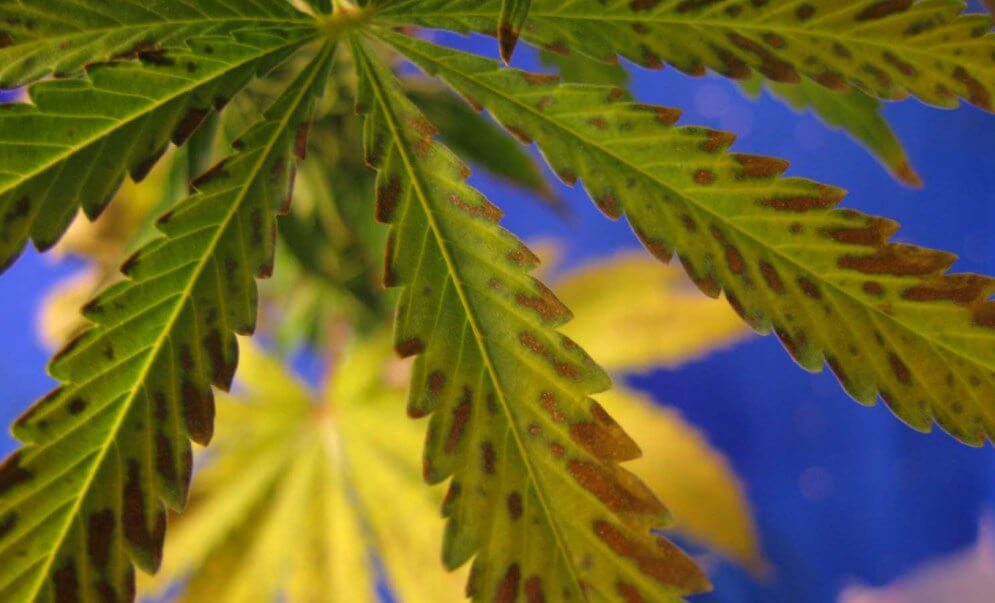
As spores grow, the fungus deposits a powdery substance on your plant’s rust-coloured foliage. You might notice tiny brown flecks or a dark hue at the leaf’s edge.
As the organisms spread through the air and water, the problem could become severe. They become airborne and spread to other plants in the tiniest breeze.
The affected leaves will wilt and drop off if the infection is not treated. Your crop won’t perish, but the problem might interfere with bud growth.
Marijuana rust fungus
Infection with a fungal parasite that only attacks plants is called Pucciniales, also known as Uredinales and causes rust fungus. During flowering, the organism causes brown spots on leaves that have the potential to ruin your crop.
Pucciniales are distinct from other fungi because they only harm and feed on living plants. The others can grow and survive on dead matter.
Your cannabis crops are not killed by it, but it damages them and prevents them from properly absorbing nutrients.
Long-term moist foliage is vulnerable to rust fungus. It produces fungus spores that can be transported by water and air to the leaves of other plants and nearby crops. The reason why you see more rust spots after watering is due to this phenomenon.
Rust fungus should be distinct from leaf septoria, another factor in leaf spot development. A different fungus called Septoria lycopersici is responsible for that harmful illness.
Since both infections have similar symptoms, it cannot be easy to distinguish between them. The main distinction is that leaf septoria spores flourish on the dead matter while the Pucciniales parasite feeds on living plants.
How to detect the presence of rust fungus
Weed plants exhibit symptoms that several factors could cause, so it’s crucial to correctly diagnose the issue before applying any remedies.
The following symptoms of rust fungus include:
- Lower branches of your plant or upper or lower leaves may have white or yellow leaf spots.
- Spots or stripes that are yellow, orange, or another colour on the underside of the afflicted foliage
- Under the infected leaves, there are small, blister-like bumps or orange to brownish-red pustules.
- Spots of powdery reddish-brown on the leaf’s surface.
- The stage of the infection determines the type of symptom. Orange spots appear in advanced stages on weed leaves.
Rub a bump with your fingers to determine whether it is an infection or nutrient deficiency. The leaf has rust fungus infection if the substance falls off.
A lack of calcium or magnesium
Although fungus typically results in brownish-red bumps on the foliage of cannabis plants, nutrient deficiency is another possibility. A magnesium deficiency is more likely to cause rust spots on leaves during flowering than a calcium one.
Throughout their growth, and especially during flowering, marijuana crops run the risk of running out of nutrients—the risk increases during the bud-producing stage, when they require a lot of nutrition.
There are two reasons why plants might not get enough calcium or magnesium. Either you aren’t giving them enough food or suffering from nutrient lockout. When they are unable to absorb nutrition from the soil, that happens.
It’s critical to address the issue immediately to prevent rust spots from spreading throughout the foliage. Your crop’s growth and bud production rates may be hampered by the sick and dying leaves.
It’s essential to be aware of calcium and magnesium deficiency symptoms before looking into treatment options. One of the signs is rusty spots on cannabis leaves.
Signs of a magnesium deficiency
A magnesium deficiency typically manifests as symptoms 3 to 6 weeks after it occurs. The first observable symptom is interveinal chlorosis, which is the yellowing of the areas between the veins of older leaves. Rust spots start to show up.
The brown spots become more numerous as the deficiency spreads throughout the plant. They grow in the foliage’s tips and margins and interveinal areas.
As some of the leaves on your weed plant start to curl up, die, and fall off, you’ll notice it looks sickly and droopy. The damage can reduce bud production when brown spots on cannabis leaves during flowering increase.
Symptoms of a calcium deficiency
The following symptoms of calcium deficiency are:
- Lower leaves curl and gradually develop irregular brownish-yellow spots with brown borders.
- Root tips begin to wilt and die, which slows down the plant’s growth and lowers yields.
- The symptoms are similar when there is a lack of magnesium, but the leaves turn yellow, and the veins stay green.
How to remedy a lack of magnesium and calcium
Being vigilant will help you catch signs of nutrient deficiency early and treat it. It’s critical to address the issue immediately because it might impair your plant’s capacity to absorb nutrients.
Give your cannabis plants more nutrients after identifying rust-coloured spots on the leaves caused by magnesium and calcium deficiency. Consider treating your crops for a nutrient lockout if the situation needs to improve.
Check the pH of the soil because different values have an impact on how quickly nutrients are absorbed. The ideal range for cannabis plants is 6.8 to 7.2. Even if you give crops enough food, they won’t be able to absorb it if the pH is outside of that range.
The nutrient lockout could result; if soil pH is optimal;
- cold or wet growing conditions
- a calcium and magnesium deficiency
- When your plants block out the two elements, they also stop other nutrients from being absorbed.
Nutrient burn
Cannabis nutrient burn may be the issue after eliminating fungus and nutrient lockout as the causes of rust spots on leaves during flowering.
Your soil’s excess nutrient levels are the cause of this issue. Use tap water to rinse the medium to reduce the content.
Add fertiliser to your plants because depletion can make them wilt. Take half of the previous sum to begin with. Keep an eye on your crops and up the dosage as necessary.
How to stop the spread of rust fungus
There isn’t a universal cure to rid marijuana plants of the parasite. However, you can manage it and stop it from getting to your crops in the growing area.
To reduce the possibility of rust spots on cannabis leaves, take into account these recommendations:
- Choose seeds from a reputable source like Mediseed Man.
- When watering your plant, avoid soaking the leaves because wet foliage encourages the growth of the rust fungus.
- Give your crops enough light so that the extra water can evaporate.
- Keep your plants apart to reduce the amount of moisture in the air, whether you’re using indoor or outdoor weed seeds.
- Fungicides should be used to get rid of the parasite. Avoid ones made chemically because they might have adverse effects. Garlic, sulphur, and copper-based natural DIY sprays work better.
Should I use rust to trim off leaves?
Yes. Removing the infected leaves prevents the infection from spreading to the plant’s other foliage. Make sure to get rid of them right away.
Throw away the plant if you see fungal growth on most leaves. It’s better to give up one than to let the fungus infect all of your crops.
Control and prevent rust fungus for a good harvest
It would help if you weren’t concerned when you notice rust spots on the leaves of weed plants. Your crops may be in danger, but the issue can be avoided and resolved.
Knowing the origin of rust fungus, keep an eye on your cannabis plants to spot issues early. Treatment is administered right away to lessen crop damage and enable recovery.
It is possible to eliminate the risk, let your plants thrive, and get abundant yields because the parasite doesn’t kill them. For more information on growing marijuana, visit our website and purchase high-quality seeds.