Firstly, light intensity is essential for healthy plants and abundant indoor grow harvests. However, the terminology, abbreviations, and power metrics can be confusing. By selecting and setting up your grow environment lights with an understanding of PAR for cannabis plants, you can ensure they have everything they need to thrive.
Let’s examine PAR and its operation in more detail.
What is Photosynthetically Active Radiation (PAR)?
You must comprehend what marijuana is to provide the best PAR. The portion of the visible light spectrum known as photosynthetically active radiation, or PAR for short, enables photosynthesis in plants.
This region of the electromagnetic spectrum has wavelengths between 400 and 700 nanometers (nm). Light has a blue hue at the bottom of this range; you can find the ultraviolet region below 400 nm. The electromagnetic waves are infrared above 700 nm, and the colours close to this range are deep reds.
For healthy, content plants to grow, cannabis plants require a spectrum of light that includes both blue and red wavelengths. Consider the various growth stages, as the PAR required for flowering differs from that needed for the vegetative or seedling stages. Fortunately, growers can determine how much PAR their lights produce in various ways.
Cannabis growers should be familiar with Photosynthetic Photon Flux Density (PPFD) and Micromoles (mols). PPFD is the strength or quantity of light photons that reach the surface of your plants and expressed in units called micromoles (mols). Please pay attention to the light intensity requirements for your crops because light weakens as it travels farther.
Which PAR is ideal for cannabis?
Finding the ideal PAR for veg, flowering, or seedlings can be difficult, and it can be challenging to get the correct light cycle for weed. There are many influencing factors, but the PAR requirements depend on the growth stage.
The Daily Light Integral (DLI), expressed in moles, is obtained by adding the PPFD values for a single day. Most growers aim for 40 moles per day to maximise yields. Fruit and vegetable plants, which produce crops, require between 20 and 40 moles of light per day. The same is true for cannabis plants; the absolute minimum that they need is 20 moles per day.
The best PAR for vegetables
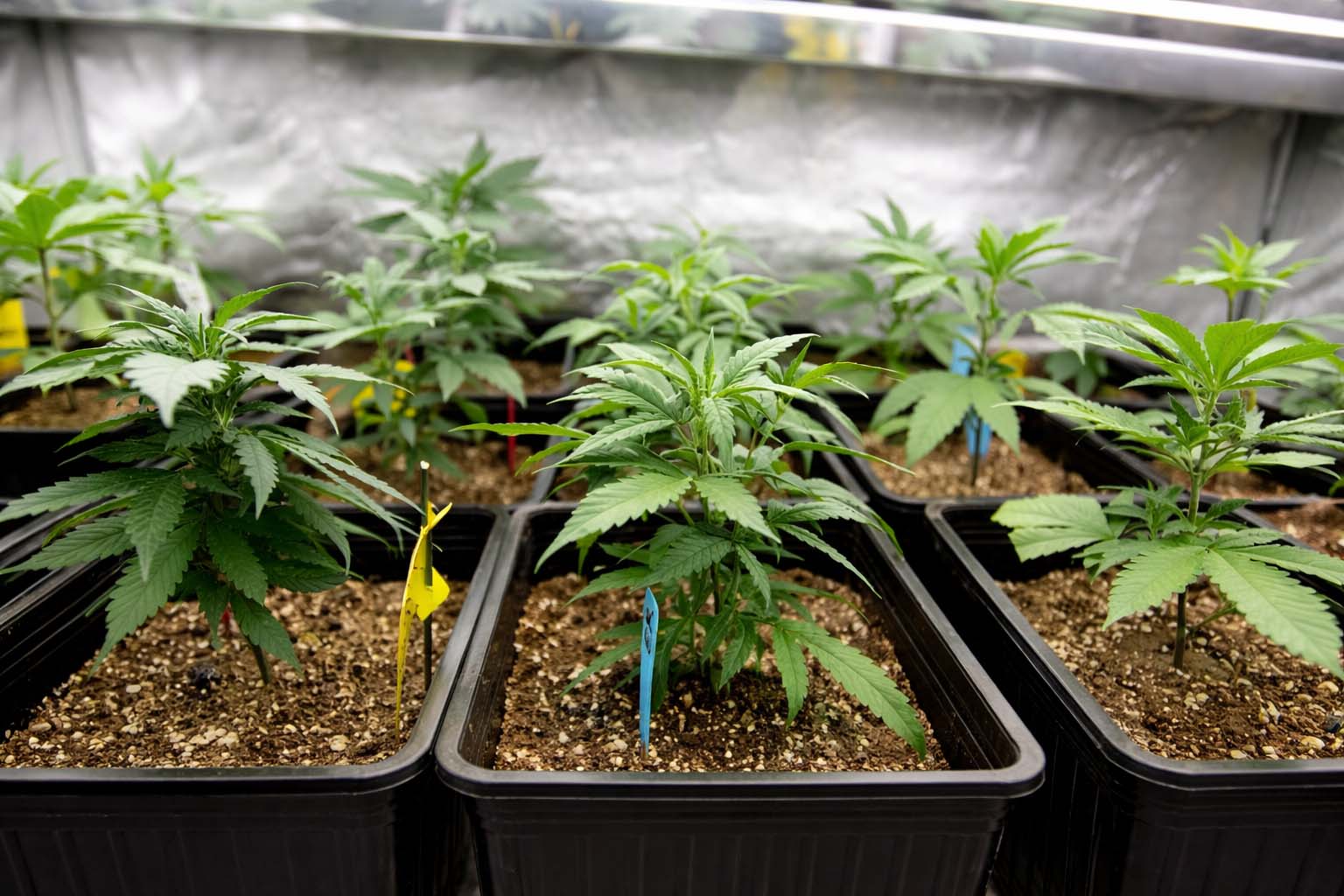
Plants require a minimum of 20 moles of light for 18 hours straight during the vegetative stage of development. Thus, the range of the PAR for vegetables is 300–600 PPFD.
What is the PAR for flowering?
Weed plants require 12 hours of light and 12 hours of darkness to enter the flowering stage. The flowering plants will need a light with a minimum of 460 PPFD during these 12 hours.
The PAR values can be raised to between 620 and 1000 nm for better yields. Knowing how much PAR to use for flowering is essential because cannabis is photosensitive during this stage.
How much PAR do autoflowers yield?
Throughout all stages of development, autoflowers don’t require any adjustments to their light cycles. Autoflowers need 18 hours from seedling to flowering, as opposed to photoperiod cannabis, which requires a change from 18 to 12 hours of light for flowering to start.
Compared to photoperiod plants, autoflowers have a longer daily light cycle, so less light is required. The suggested PAR for cannabis autoflowers can stay the same throughout their life cycle and ranges from 300 to 620 PPFD.
What additional elements can affect the PAR?
Photosynthesis and plant metabolism are more intricate than you might imagine. Numerous factors, some above soil and others below, can affect the PAR of cannabis. You’re about to learn some that have the most extensive effects on light levels.
Levels of carbon dioxide (CO2)
Since CO2 and photons (light) are the two main components required for photosynthesis, CO2 significantly influences PAR levels in cannabis. Insufficient CO2 levels are one of the main things slowing down photosynthesis.
To maximise photosynthetic activity and prevent growth stunting, CO2 levels for indoor growing are typically between 400 and 600 ppm. For cannabis plants, increasing CO2 to at least 800 ppm significantly increases photosynthetic activity and permits higher PAR levels.
Temperature and humidity
Cannabis plants grow and yield more when the ideal temperature is found and maintained. The perfect temperature and CO2 concentration are inversely correlated, with the ideal temperature being higher at higher CO2 levels. Even with more CO2, excessive temperatures can slow or halt plant growth.
Another element that affects plant growth and PAR in the cannabis industry is humidity. The ideal humidity level depends on the ambient temperature. Generally speaking, higher humidity and temperatures promote growth, but as with all of these factors, it also depends on the stage of development.
Keep the temperature and humidity within the advised ranges to get the best PAR for cannabis. Climate considerations allow you to raise PAR levels above the suggested PPFD values.
Genetics
Cannabis plants can grow naturally in many environments, from rocky mountains to tropical forests, all of which have different light conditions. The issue of how much PAR to give plants for seedlings, veg, and flowering is complicated by genetic variability.
Signs of excessive light
With so many factors, it’s simple to go overboard and have too much light. Some of the warning signs include:
Light burn
One of the most typical indications that the PAR level for cannabis is too high is leaf burn. Cannabis plants that have leaf burn or cannabis light burn typically have yellow leaves with green veins. When there is a nitrogen shortage, the leaves may also turn yellow.
The affected area and how firmly the leaves are fastened to the stem are reliable indicators. Light-burned leaves are difficult to remove, whereas nitrogen-deficient leaves easily fall off. While nitrogen deficiency can appear close to the bottom of the plant, light burn primarily affects the leaves at the top of the plant.
Airy and loose buds
Plants that receive too much light must work harder to maintain their metabolisms, which results in nutrient deficiencies. To avoid having loose, weak, and airy cannabis buds that often feel crisp to the touch, make sure you get the best PAR possible for flowering.
Lightly bleached “white” buds
Buds may lose all or part of their colour pigments when exposed to excessive light, turning completely white. Lower potency is frequently the result of bud bleaching, and the nugs may even lose their cannabinoids. Keep an eye on the PAR for flowering, and don’t confuse very resinous, trichome-covered buds with bleached ones.
Indications of insufficient light
Plants that receive insufficient light experience some drawbacks as those that receive too much light.
These include:
Slow growth
A clear consequence of insufficient lighting is slower-than-expected growth. Light is a crucial component of photosynthesis; without it, plants cannot develop normally.
Compared to adult crops, seedlings have a different PAR value. If you think your plant is growing slowly, compare its height to other plants of the same age and strain.
Stretching
To get closer to the light, plants that aren’t getting enough of it tend to grow more stems. These crops have internodes that are more widely spaced apart than usual, giving them the appearance of being stretched or taller. Pay close attention to your PAR for veg stages.
The best PAR for your plants depends on light.
As you can see, choosing the proper light intensity is crucial, so bear that in mind as you set up and manage your grow area. For cannabis seedlings to adults, maintaining the PAR and using the right equipment can significantly simplify your life and help you produce a perfect, abundant crop.
At the very least, aim for 20 moles of light per light session; if you’re a high achiever, aim for 40 moles daily. Always be on the lookout for your plants’ growth stages and make necessary adjustments to the CO2, temperature, and humidity levels along the way.
Why not register to make your own grow diary, regardless of how experienced you are with cultivation? You only need to purchase seeds from our Mediseed Man store’s immense selection and register. Record your growth process weekly, such as how much PAR you’re using for flowering, and get tips along the way to that yield.