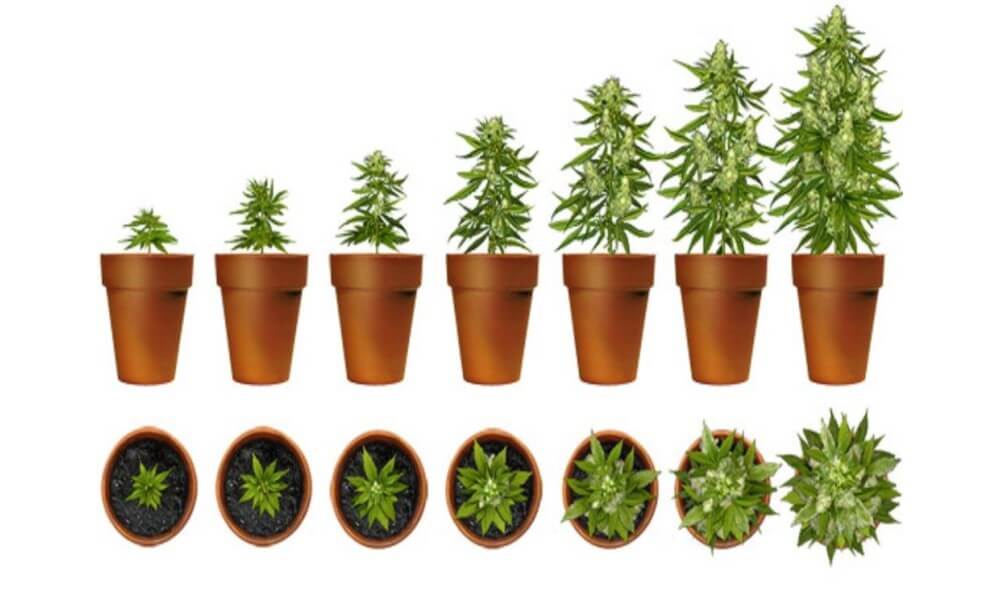
Like all other living things, marijuana plants have a life cycle that includes seven stages before the crucial harvest. Behind the scenes, a wide variety of activities take place during these weed plant stages.
Your marijuana plant’s nutritional and environmental needs change as it grows. You must anticipate these changes and take appropriate action to give your plants what they need to grow and stay healthy.
Don’t let the part you must play in the cannabis life cycle overwhelm you. Continue reading to learn how to grow at home successfully. So that you’re ready to go as soon as your cannabis seeds arrive, we’re here to walk you through the various stages of growing marijuana.
What are the seven stages of weed plants?
There are seven essential phases in the cannabis growing process. Each one is described in detail below, from seed to harvest.
Sadly, marijuana is monocarpic, meaning that the plant dies after each stage has finished. As the cycle ends, you’ll need to sow new seeds for a brand-new crop.
Let’s take a closer look at the various stages of the weed plant to learn what occurs at each one and how we can use these natural processes to get the best yields.
Stage 1: Seed
The first step in growing cannabis and beginning the weed growth cycle is acquiring a marijuana seed.
Inside the husk, a tiny plant with a stem, root, and two small leaves is dormant, awaiting the right conditions to emerge into the world.
You might be wondering how it survives. The endosperm provides food to the embryo during this hibernation period; seeds can last long.
Nutrients in a seed disappear after one year, lowering the possibility of successful germination.
Your seeds will stay fresh if you keep them in a refrigerator-like environment that is consistently cool, dark, and dry.
This helps the seed retain nutrients and prevents it from unintentionally sprouting. Poor conditions could start the subsequent stage of the cannabis life cycle if it pops.
Avoid everyday storage items like jars or plastic bags because they can trap moisture and cause mould growth and early sprouting.
Stage 2: germination
The next phase of the cannabis growth cycle is germination. You can get your seeds to emerge from hibernation, burst their husks, and focus their energy on developing a taproot by exposing them to particular environmental conditions.
Start the germination process with as many seeds as will fit in your grow space as fully-grown plants. Prepare to see the weed through its entire life cycle.
Don’t waste your time with negative people. They most likely need to be thrown away if they are green or white and feel squishy. Brown, dry, and hard describe a healthy, viable seed.
Stage 3: seedling
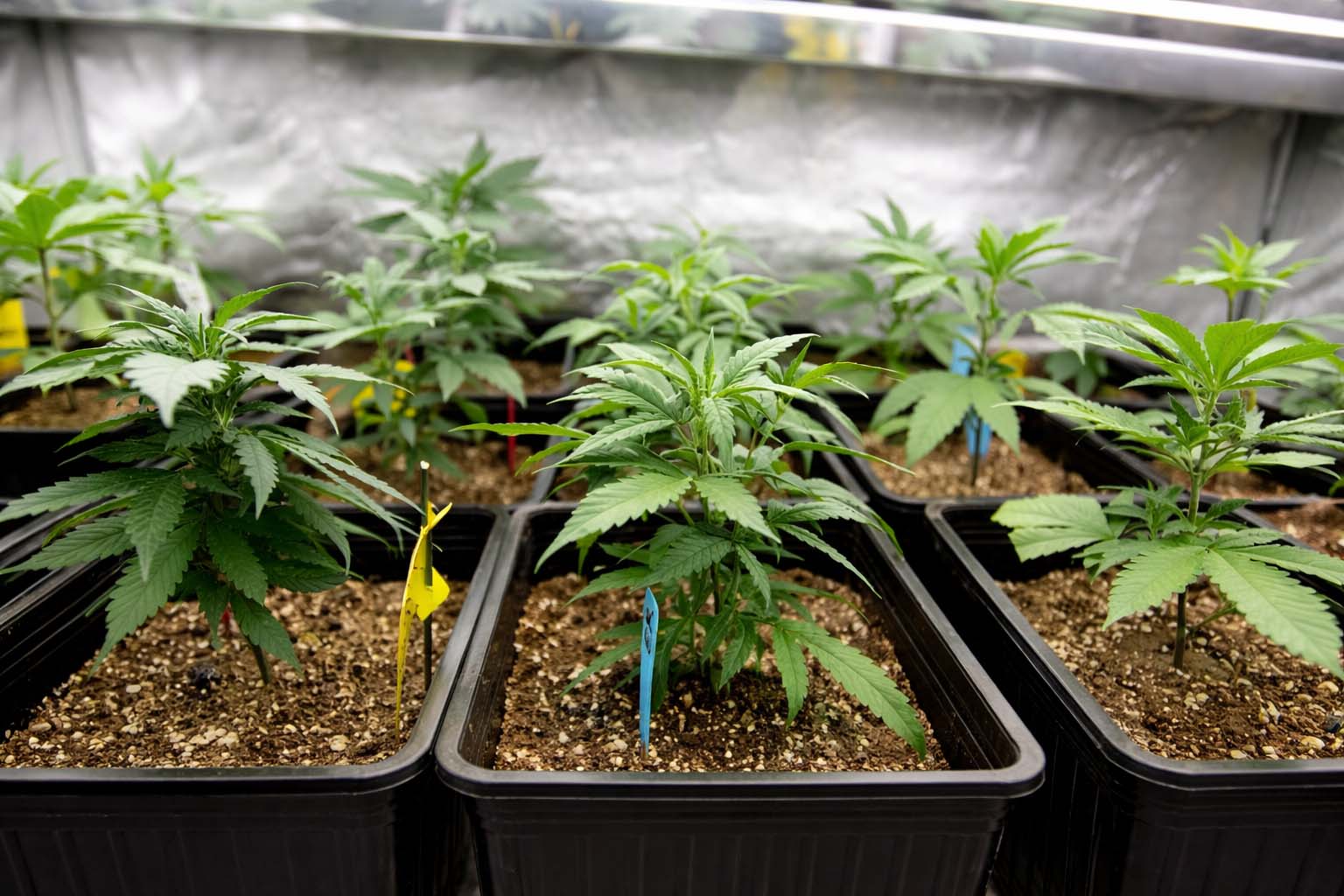
Congratulations, you have a baby pot plant and are moving through the weed plant stages. Put it gently into its first growing medium after removing it from the plates.
The tiny stem extends upwards from the drying husk, revealing two rounded leaves known as cotyledons. The plant’s first exposure to sunlight is used to generate energy from these leaves.
Keep the seedlings warm and moist as they progress into the following stages of marijuana plant development. They prefer temperatures of 21 to 29.5°C and humidity levels of 75 to 85%.
They also require an 18:6 cycle of light to dark to thrive. The leaves are susceptible at this stage. To lessen the intensity of the light and heat, use CFL or LED bulbs, but make sure they are placed close enough. Your plants will stretch if they are too far away, becoming lanky and weak.
Your plants are highly vulnerable to mould and disease during the two to three weeks they spend in this stage of the weed plant growing stages. Keep the area tidy and water them with a spray bottle to prevent moisture accumulation at the soil level.
Using this technique, root rot and other issues with cannabis seedlings can be avoided as well as root damage and overwatering.
Stage 4: Vegetative
The vegetative stage of the cannabis life cycle lasts the longest on average. Depending on your growing strain, it can last anywhere from 3 to 16 weeks. Your plant will grow during this period exponentially. Cannabis in good health can produce an average of two inches per night.
Be on the lookout for escaping roots to determine when your seedlings are vegging. It’s time to transplant your weed if they’ve reached the bottom of its current container.
You can now begin using training techniques, and topping your marijuana keeps it at a manageable size. Additionally, your plant needs a nitrogen boost to encourage thick foliage.
Metal halide (MH) lights should be used in place of CFL or LED lights while maintaining the same light-to-dark cycle schedule for indoor growers.
Keep weed plant temperatures between 21 and 26.5° C. during this vegetative stage. To reflect the day’s peak before it cools off into the night, you should aim to adjust the heat indoors.
Reduce humidity by 5% each week until the conditions reach 45–55% to prepare your plants for the next weed growth cycle phase.
Stage 5: Pre-flowering
According to science, pre-flowering, also known as flowering initiation, is not a stage of a weed plant. Nevertheless, we view it as a crucial stage in developing a marijuana plant that needs close monitoring.
Pre-flowering can start as early as the fourth week of the vegetative stage, depending on the strain. Sex organs can now be seen at the nodes because the weed has reached this stage of development.
During this phase, cannabis plants gorge themselves on potassium and phosphorus to hasten the flowering process.
They can develop into three sexes:
Pistils are the pre-flowers produced by a female weed plant. Stigmas, which resemble hairs, are used to collect pollen from male flowers. They emerge from the calyx, which is shaped like green tears. These grow into dense buds with the highest THC and CBD levels.
Male weed plants go through various stages, and at the nodes, they form tiny balls. These are pollen sacs, which eject pollen to mate with nearby females. There are no sought-after compounds in these pre-flowers like there are in females.
Males are only helpful if you plan on breeding. Unwanted males can ruin female plant crops. If seed production isn’t your goal, it must be located and eliminated quickly.
Stage 6: Flowering
The pre-flowering stage is four to five weeks later, and the mid-flowering processes start. Growth will stop at this stage of the weed plant’s development to focus energy on accelerating bud development.
Your plants start moving into the final stages of cannabis flowering starting in week six. The pistils change colour as trichome production ramps up, making the fat buds sticky.
You must increase the water and nutrients your plants are receiving to support them during this busy time.
A week or so before you plan to harvest, stop feeding the plants any nutrients and flush the plants with water that has a pH of 6.5. Doing this prevents the buds from absorbing any odd or unpleasant fertiliser flavours.
Stage 7: Harvest
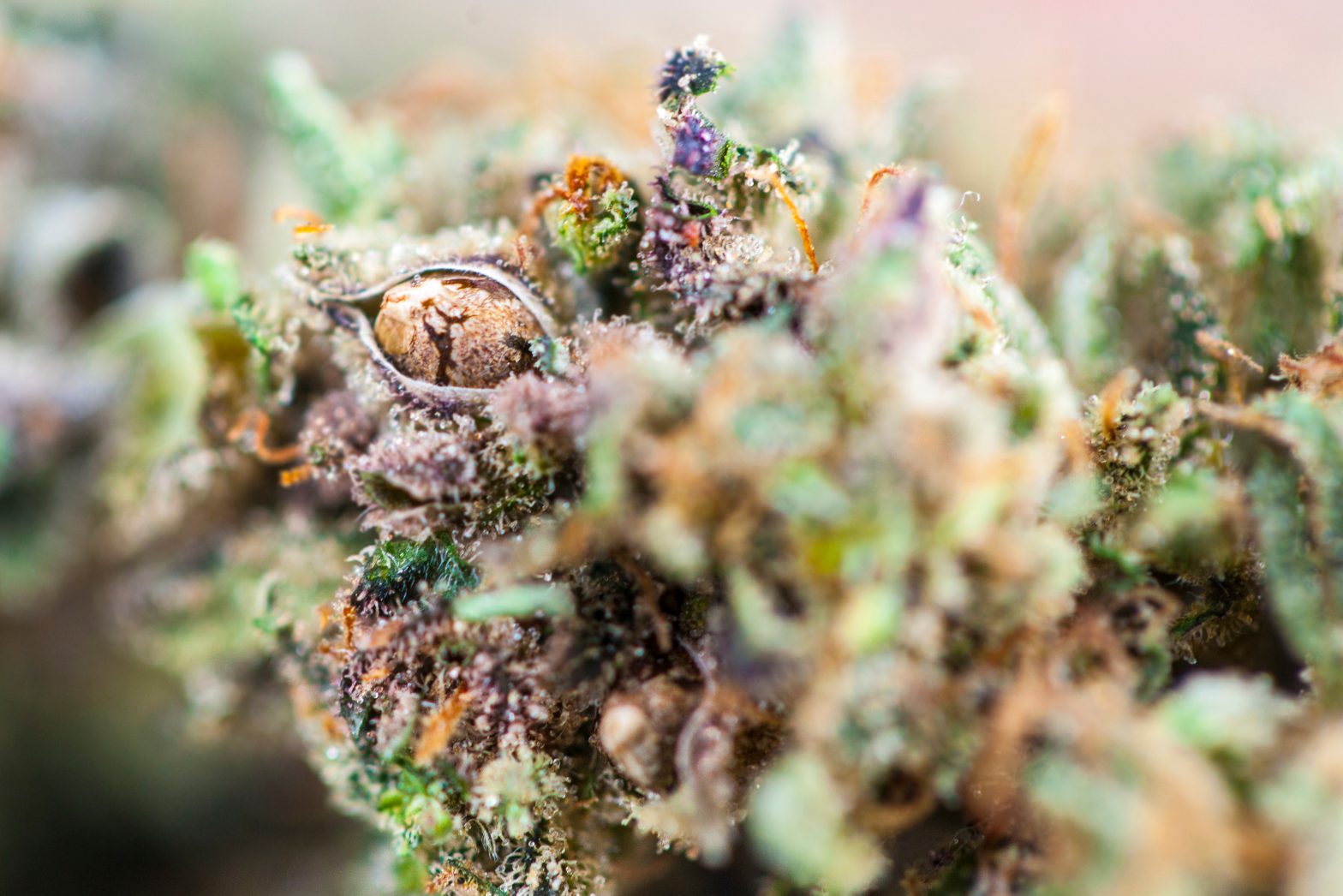
The end of the cannabis life cycle occurs when the flowers stop developing and mature into dense, intense, resin-dripping berries.
While the frosty trichomes covering the surface grow and change colour, pistils start to curl and darken. These appendages are responsible for transporting terpenes, cannabinoids, and flavonoids.
It would help if you observed these changes to harvest your weed at its peak or full potential. If you wait too long, the THC content rapidly decreases, and degeneration starts.
The stage of the marijuana plant that is most exciting and rewarding is harvest. Recognising the signs of maturity is a skill in and of itself. You’ll need to develop the patience to avoid sabotaging your weed’s potential by starting too early.
To get the most out of your marijuana, take good care of your seeds as soon as you receive them from Mediseed Man.
There are seven critical stages of weed plant development. When deciding when to plant outdoors and how to adjust your indoor parameters accordingly, you must carefully consider each one.
Use this timeline of the cannabis life cycle as a resource at any point, and consult the cannabis growth chart for more details to help you stay on course for success.
You can confidently grow your incredible buds at home from seed by ordering your seeds from Mediseed Man today.