The decision between photoperiod and autoflowering cannabis strains is one of the first that growers make before starting a plant. Cannabis plants that are autoflower are simple to grow and can be harvested more quickly if you use an excellent autoflower light schedule.
Photoperiod strains, on the other hand, have much higher yields but need more room, specialised knowledge, and seasonal changes in light to bring on flowering.
You’ll discover the various light options for growing autoflowers in this guide, along with which one is best for your cultivar.
Does autoflowering require darkness?
Autoflower cannabis plants don’t depend on darkness to flower, unlike photoperiod strains that need at least 12 hours of darkness to start the flowering cycle. When they are fully grown, they begin to produce buds.
Some growers use light schedules for autoflower plants that deprive them of light for a certain number of hours each day. The crop will still produce a high yield as long as the dark period does not last longer than six hours.
You’re likely to get more small plants and a lower harvest if the exposure to brightness falls below 18 hours.
Stages of flowering and vegetative autoflowering
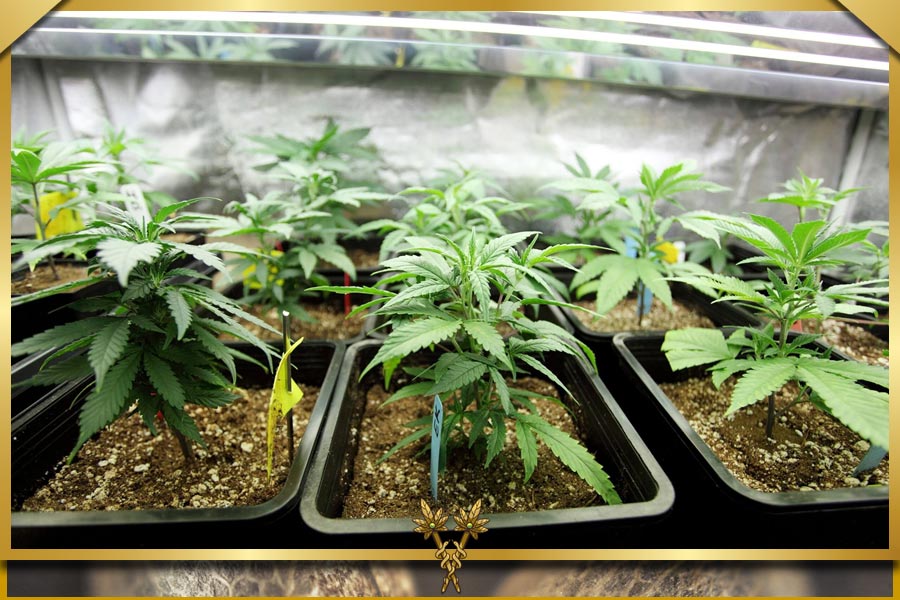
Cannabis with photoperiods and autoflowering undergoes a vegetative and flowering phase. The latter is when the buds first appear. Only during the first stage does a plant produce leaves and stems.
The vegetative stage of autoflowers lasts for about 2-4 weeks. The flowering cycle then starts.
Autoflower strains typically require 8 to 12 weeks from seed to harvest. Our autoflower seeds can mature in as little as seven weeks. You can get a yield from these feminised autoflowering cannabis seeds in a shorter time.
What are the best lights for autoflowers?
When growing plants that require a photoperiod, growers use blue lights during the vegetative stage and more reddish-yellow lights during the flowering stage. Your automatic flower light cycle can use the same logic.
Give your plants a blue spectrum ranging from roughly 400 to 550w while in the vegetative stage. It promotes the short, stocky growth of cannabis plants.
Your autoflowering cannabis strains will require a red spectrum during the flowering stage, with higher wavelengths between 550 and 700w, to encourage budding and produce big, dense flowers.
Remember that you can still successfully harvest even if you don’t offer a complete spectrum. As long as a cannabis plant receives bright light that includes some red and blue, it will thrive.
There is no ideal light for cannabis plants that autoflower. However, if you give your plants the spectrum they require at each stage, you’ll get better yields.
Which autoflower light schedules are the most popular?
According to the majority of growers, there should be between 18 and 24 hours of light per day when cultivating autoflowering cannabis indoors.
Growers typically employ one of four basic light schedules:
A light schedule of 18/6
There are 18 hours of light and 6 hours of darkness on the 18/6 light schedule. For autoflowering cannabis plants, it is the most typical light cycle.
You’ll use less energy, and the plants will have more time to rest because there won’t be as many hours of darkness. During the six hottest hours of the day, you can turn off your lights if you live somewhere with plenty of sunlight.
Pros:
- You allow your plants to rest.
- Because the procedure uses less electricity than the 24/0 cycle, you save money and energy.
Cons:
- A timer is required.
- Your plant’s growth rate is slower than on a 24/0 schedule.
Schedule for 24/0 autoflower lights
This cycle is ideal if you’re growing autoflowering cannabis in a cold climate. This cycle will use more electricity if your LED or HPS lights are left on continuously, but it will keep your plants warm, allowing them to grow more quickly.
This autoflower light schedule eliminates the need for a timer. You can expect your lights to be on through harvest.
Pros:
- High likelihood of a greater yield.
- Since you don’t need to turn off your lights, you don’t need a timer.
Cons:
- Given that you’ll use more electricity, the process is expensive.
- Your plants receive no rest.
A light schedule of 20/4
The 20/4 light cycle, which falls between the 18/6 and 24/0 light cycles, is growing in popularity among growers of autoflowering cannabis. Your plants will get downtime since you won’t leave your lights on all day.
It strikes the ideal balance. Compared to the 18/6 schedule, you’ll get better yield results, and a 24/0 plan won’t cost you as much electricity.
The light schedule of 12/12
When growing these crops in the same area as photoperiods, growers typically use the 12/12 autoflower light schedule since it is the light cycle for the latter.
It’s also the prefered schedule for people on a tight budget who can’t afford to practise the longer light cycles because of the higher electricity costs.
Why is the 12/12 light cycle not optimal for autoflowering cannabis strains?
For the previously stated purposes, you can use the 12/12 light schedule, but it is not recommended for autoflowers.
If cannabis plants receive at least 18 hours of light each day, they typically yield impressive harvests. Your autoflowering cannabis plants can’t reach their full potential when you use a 12/12 cycle.
By reducing the amount of light, you will produce a smaller plant and a smaller crop than you would if you used the 18/6 and 24/0 schedules.
What is the best light schedule for autoflowers?
Because so many variables are involved, there isn’t a best autoflower light schedule. It depends on how much output you want and how much you can spend on electricity.
One more crucial component is the cannabis seeds you plant. Check out Mediseed Man’s seed bank and do some research to find the seeds that are best for growing autoflowering marijuana indoors.
According to the strain they are harvesting, growers typically adjust the lighting. Any typical light cycle can be used if you’re a beginner, but we suggest starting with the 18/6 process because it should work for all autoflowers.