Cannabis pruning is an important technique for growers who want healthier plants, better structure, and a more manageable canopy. When done right, pruning cannabis can boost airflow, improve light reach, and help the plant focus energy on strong growth. It is not about cutting at random. It is about making deliberate choices that support plant health and better overall development.
At Mediseed Man, we view pruning as a practical part of plant care. A well-pruned plant is easier to manage. It is easier to inspect. It is also better able to use its growing space. Whether you are growing cannabis indoors in Australia or growing cannabis outdoors in Australia, learning how to prune cannabis plants properly can make a real difference.
What Is Cannabis Pruning?
Cannabis pruning is the process of selectively removing certain parts of the plant to improve growth and structure. This can include dead leaves, damaged growth, crowded inner foliage, or weak lower branches that are unlikely to perform well.
Growers use cannabis plant pruning to help achieve several goals:
-
Improve light exposure across the plant
-
Increase airflow through the canopy
-
Remove low-value or unhealthy growth
-
Help the plant focus energy on stronger sites
-
Maintain a cleaner, more manageable shape
Good pruning should always have a purpose. The goal is not to strip the plant unnecessarily, but to improve how it grows across different weed plant stages.
Why Cannabis Pruning Matters
There are several reasons growers use cannabis pruning techniques as part of their regular plant care.
Better Light Penetration
Large fan leaves and dense growth can block light from reaching the lower parts of the plant. Strategic pruning helps expose more of the canopy to usable light.
Improved Airflow
A crowded plant can trap heat and moisture, especially in indoor setups. Pruning opens the structure and helps air move more freely through the plant. This can also help reduce environmental stress. It works best with good grow room control. It also helps protect against cannabis plant heat stress.
Stronger Energy Use
When a plant supports too much weak or shaded growth, it continues to invest energy in areas that may never produce well. Pruning cannabis helps redirect that energy to healthier, more productive growth.
Easier Plant Management
Pruned plants are often easier to shape, train, inspect, and maintain. This is especially helpful in smaller grow spaces where plant control matters. If you are also using training methods, pruning can work well alongside techniques like super cropping and Screen of Green (ScrOG).
Reduced Risk of Issues
Removing dead, damaged, or crowded foliage can also reduce the risk of pests, mould, and other environmental problems.
When to Prune Cannabis
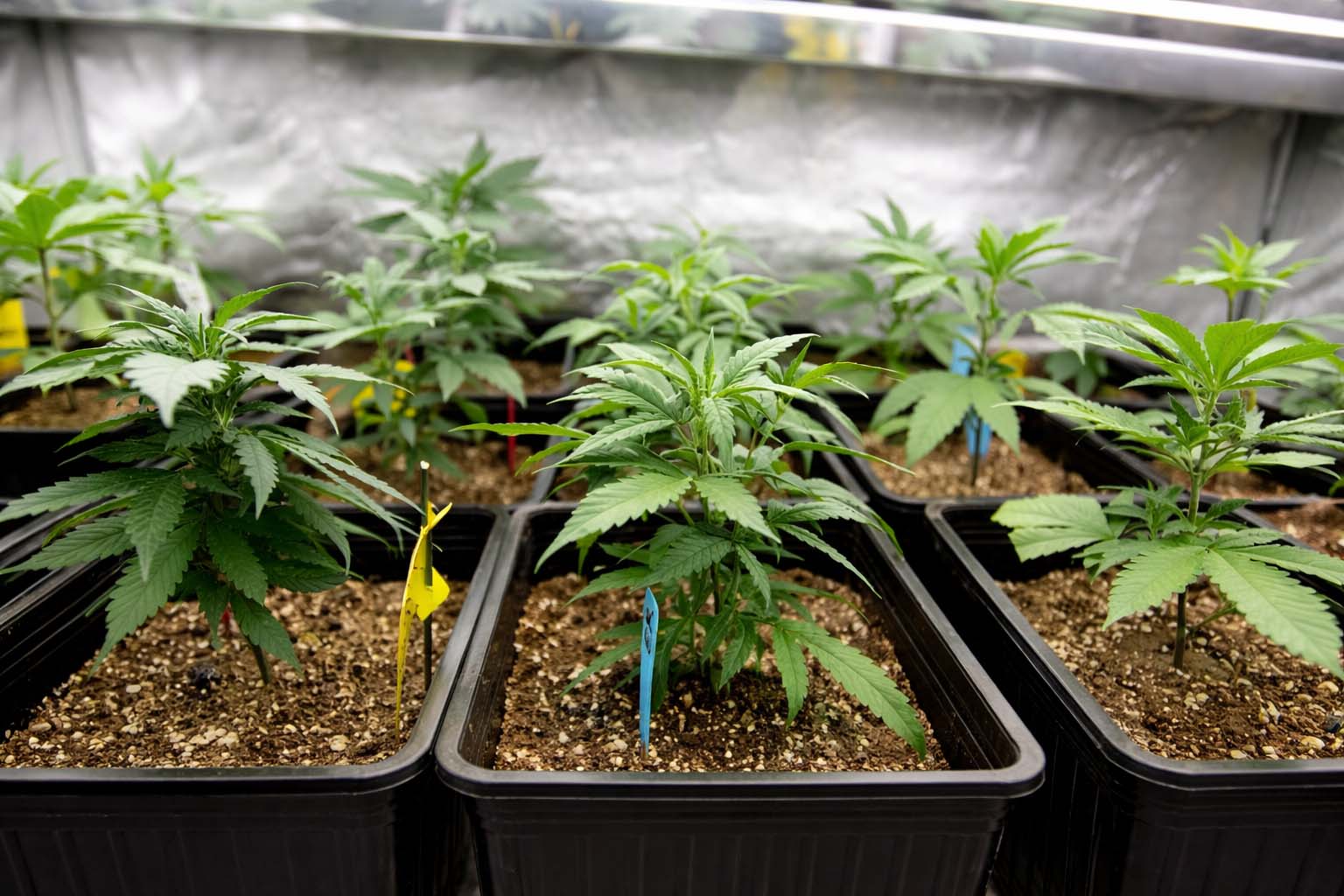
Knowing when to prune cannabis is just as important as knowing how. In most cases, the best time to prune is during the vegetative stage. The plant is growing actively then. It still has time to recover before flowering.
Once the plant is healthy and established, with several nodes, growers can start removing unhelpful or crowded growth. For photoperiod plants, pruning is usually most effective in veg and sometimes lightly during the early transition into flower.
As a general rule:
-
Do most pruning during the vegetative stage
-
Keep pruning in early flower light and limited
-
Avoid heavy pruning deep into flowering
-
Only prune healthy, actively growing plants
Heavy pruning too late in flower can create stress at the wrong time, when the plant should be concentrating on bud development. If flowering timing already seems off, it can help to review common reasons why cannabis is not flowering.
Photoperiod vs Autoflower Pruning
Photoperiod plants are generally better suited to pruning because they have more recovery time. Since growers control when these plants switch to flower, there is more flexibility to prune and shape them gradually.
Autoflowers are usually less forgiving. Their shorter life cycle means they have less time to recover from stress, so any pruning should be much lighter and more conservative. If you are growing autos, avoid treating them like large photoperiod plants. Light management matters with autos too. So, it helps to know if there is a perfect schedule for autoflower lights.
How to Prune Cannabis Plants Properly
If you want to learn how to prune cannabis plants, the most important rule is not to remove too much at once. A measured approach works better than aggressive cutting.
Start With Damaged or Unhealthy Growth
Begin by removing dead, damaged, diseased, or clearly underperforming leaves or branches. These are the easiest cuts to justify and usually the least useful parts of the plant.
Remove Weak Lower Growth
Lower branches that receive little light often stay small and weak. In many cases, removing them helps the plant focus on stronger upper growth.
Thin Crowded Inner Foliage
If the centre of the plant is too dense, selective pruning can improve airflow and light access. Remove only what is necessary to open the structure.
Keep It Gradual
The best cannabis pruning techniques are usually applied over time. Rather than cutting heavily in one session, prune gradually and observe how the plant responds.
Use Clean Tools
Always use clean, sharp scissors or snips. Clean cuts are easier for the plant to recover from, and sterilised tools help reduce the risk of spreading disease.
Common Cannabis Pruning Mistakes
Even good intentions can lead to poor results if pruning is done carelessly. Here are some of the most common mistakes growers make when pruning cannabis.
Removing Too Much at Once
Over-pruning can slow growth and create unnecessary stress. The plant still needs healthy foliage to support photosynthesis and recovery.
Pruning Too Late
Heavy pruning during mid- or late-flowering is usually not ideal. At that stage, the plant should focus on flower production rather than on repair.
Removing Too Many Fan Leaves
Fan leaves play an important role in energy production. Some may need to go, but removing too many can reduce plant performance.
Pruning a Stressed Plant
A plant already dealing with pests, nutrient issues, overwatering, or environmental stress should not be heavily pruned. Wait to prune until those problems are fixed. Strong baseline care, including a sensible cannabis feeding schedule, makes recovery easier.
Treating Autoflowers Too Aggressively
Autoflowers generally do better with minimal intervention. Heavy pruning can reduce their performance because recovery time is limited.
What to Do After Pruning
After you prune cannabis plants, good aftercare matters. The plant should be kept in stable conditions so it can recover and continue growing.
After pruning:
-
Water appropriately without overwatering
-
Maintain balanced feeding
-
Keep temperature and light conditions stable
-
Watch for signs of recovery and new growth
-
Avoid stacking multiple stressors at the same time
A healthy plant usually responds well to light, thoughtful pruning when overall care is consistent.
Can Trimmed Material Be Used?
In some cases, yes. Depending on what was removed, trimmed cannabis material may still have value. Smaller sugar leaves or resinous trim are often saved for secondary uses. However, any material affected by mould, pests, or disease should be discarded.
If your focus is on post-harvest cleanup rather than plant training, see our guide on how to trim marijuana.
Final Thoughts on Cannabis Pruning
Cannabis pruning is one of the most useful maintenance techniques a grower can learn. It improves airflow, supports better plant structure, and makes the canopy easier to manage. When done properly, it allows the plant to use its energy more efficiently and grow in a healthier, more balanced way.
The key is to stay measured. Good pruning is intentional, not excessive. Start with the obvious cuts, work gradually, and let the plant show you how it responds. Over time, learning how to prune cannabis plants becomes a natural part of growing well.
FAQ: Cannabis Pruning
Why do growers use cannabis pruning?
Growers prune cannabis to improve airflow, increase light exposure, remove weak growth, and help the plant focus on strong growth.
When should you prune cannabis?
The best time is usually during the vegetative stage. Light pruning may also be done early in flower, but heavy pruning later is generally avoided.
How do you prune cannabis plants properly?
To prune cannabis plants properly, remove dead or weak growth first. Then thin crowded areas slowly. Avoid taking too much at once.
Can pruning increase yields?
Pruning can help improve plant structure and growing conditions, which may support better overall plant performance when done correctly.
Should autoflowers be pruned?
Autoflowers should only be pruned lightly and carefully because they have less time to recover from stress.
What should not be removed during pruning?
Do not remove too many healthy fan leaves or heavily prune a plant that is already stressed or unhealthy.